Best Payment Processing Companies for Online Businesses in 2026

Accepting payments online is no longer something reserved for large eCommerce stores. From SaaS platforms adult business, online casino, gambling forex trading and live cam subscription businesses to international retailers and specialized for high risk industries, customers expect a quick, secure, and convenient way to pay.
A merchant trusted payment processing company does more than move money from a customer to a business. It connects the checkout experience with payment methods, fraud controls, transaction routing, reporting, and settlement. The right provider can also make it easier to expand into new markets without rebuilding your entire payment infrastructure.
But with so many payment providers available, choosing the right one can be difficult. Pricing, supported payment methods, integration options, geographic coverage, risk policies, and business requirements all matter.
What Is Online Payment Processing?
Online payment processing is the system that allows a business to accept electronic payments through a website, mobile application, payment link, or other digital checkout. When a customer makes a payment, several steps take place behind the scenes. The payment information is collected securely, the transaction is checked, authorization is requested, and the approved funds move through the payment network before settlement reaches the merchant.
For businesses, a good payment processing setup should make this process as smooth as possible while helping reduce failed transactions, fraud, chargebacks, and unnecessary checkout friction.
What Should You Look for in a Payment Processing Company?
Choosing a payment processing provider should start with your actual business model rather than simply looking for the lowest advertised transaction fee.
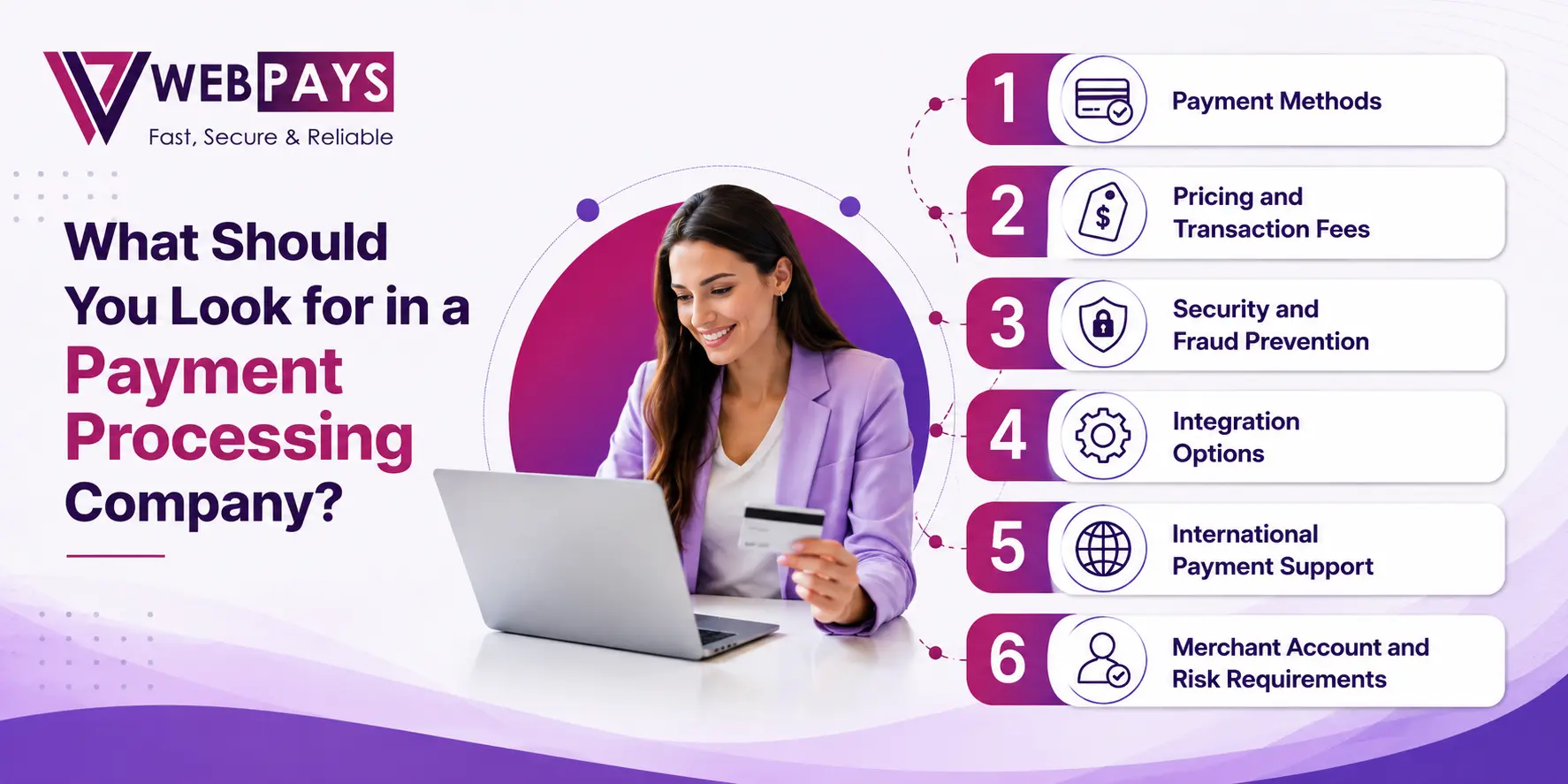
Payment Methods
Customers expect different ways to pay depending on their location and preferences. Credit and debit cards remain important, but digital wallets, bank payments, alternative payment methods, and other local options can also influence conversion rates. A provider with cross broader payment method coverage can be particularly useful for businesses selling internationally.
Pricing and Transaction Fees
Payment processing costs can include transaction fees, gateway fees, currency-conversion charges, chargeback fees, reserves, and other account-related costs.
Always review the complete pricing structure before aggrement a provider. A slightly higher processing rate may still make financial sense if it comes with better approval rates, international coverage, fraud tools, or account stability.
Security and Fraud Prevention
Payment security should never be treated as an afterthought. Look for providers that use established security practices, encryption, tokenization, authentication tools, fraud monitoring, and appropriate PCI-related controls.
The objective is simple: protect customer payment information while allowing legitimate transactions to move through without unnecessary friction.
Integration Options
Your payment processing provider should fit into your existing technology stack. Depending on your business, you may need APIs, hosted checkout, payment links, plugins, mobile SDKs, or integrations with your eCommerce platform. Webpays, for example, provides hosted checkout, embedded payment forms, Payment Links, and mobile integration options.
International Payment Support
If your customers are located in different countries, check whether the payment processing provider supports the currencies, payment methods, and markets you need.
International processing can involve additional considerations such as currency conversion, cross-border fees, local payment preferences, and regulatory requirements.
Merchant Account and Risk Requirements
Not every payment processor serves every type of business. Some industries face additional underwriting requirements because of chargeback exposure, regulatory considerations, business models, or transaction patterns. Before applying, confirm that the provider actually supports your industry and transaction profile.
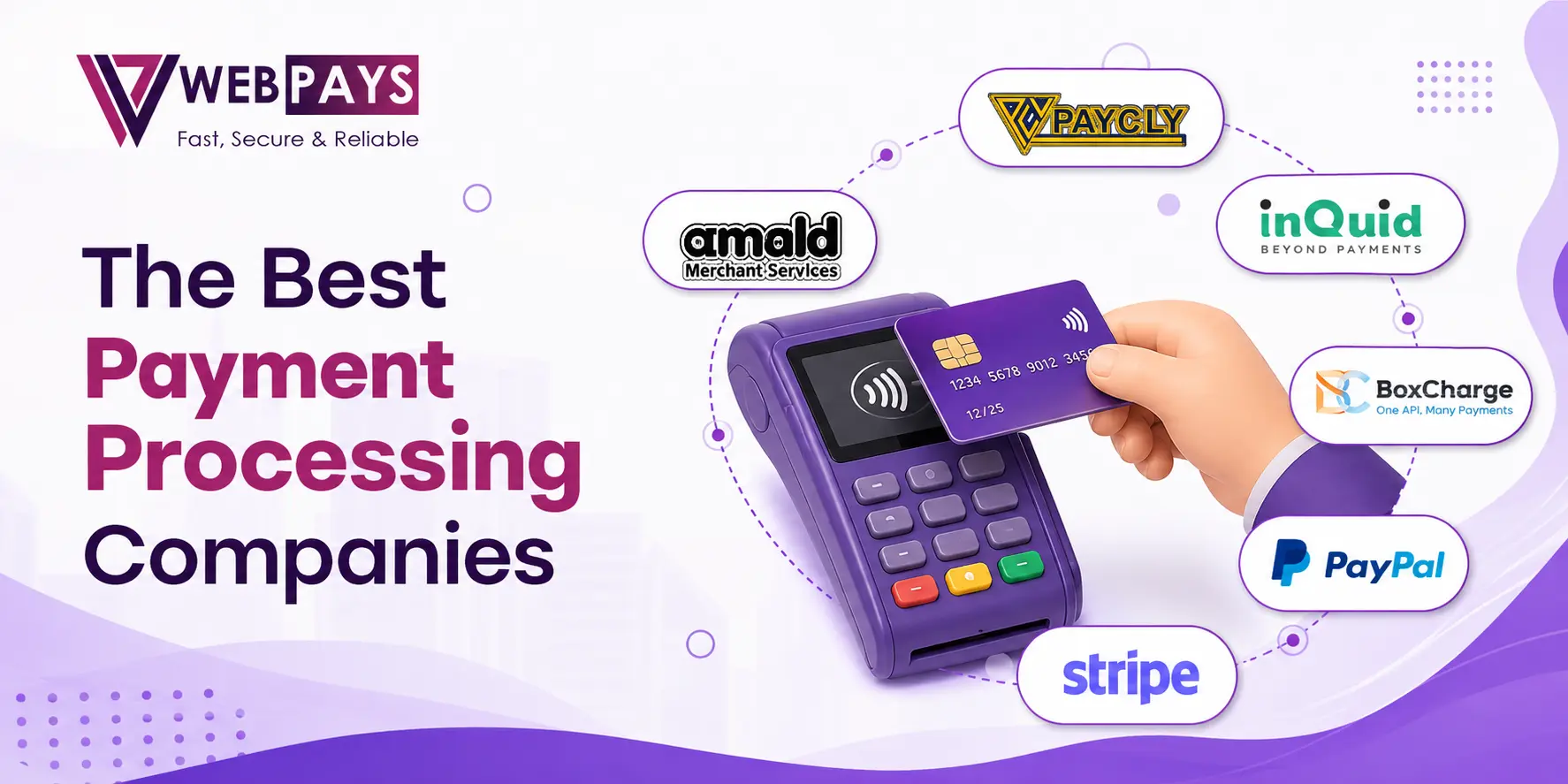
Best Payment Processing Companies in 2026
Webpays
Webpays is a payment solutions provider focused on helping businesses manage online payment acceptance and merchant processing requirements.
For businesses looking beyond basic card acceptance, Webpays can be considered for payment gateway and merchant account requirements, particularly where a customized processing setup is needed. Its approach is centered on providing payment infrastructure that can be adapted to different business models rather than forcing every merchant into exactly the same setup.
Best suited for: Businesses looking for customized online payment processing and merchant account solutions, like - online gaming, online casino gambling, cross border payment, offshore payment, crypto payment, forex trading, peptide, CBD business, Adult and live cam streaming.
PAYCLY
Paycly offers international payment processing solutions covering merchant accounts, payment gateways, credit card processing, alternative payment methods, invoicing, and other payment services.
According to its website, paycly supports more than 150 countries and offers access to more than 100 currencies. Its platform also includes payment links, e-invoicing, multi-currency processing, dedicated MIDs, reporting, and API-based integration.
Paycly also has a strong focus on businesses that may require specialized or high-risk payment processing arrangements. Its merchant-account services are designed around factors such as industry type, processing volume, payout requirements, and geographic coverage.
Best suited for: International businesses, eCommerce merchants, and businesses requiring specialized or high-risk payment solutions.
Inquid
Inquid provides merchant account and payment processing solutions for both standard and higher-risk business models. Its current offering highlights merchant accounts, acquiring relationships, multi-currency settlement, dedicated account management, and payment infrastructure for international businesses.
Inquid also focuses on high-risk eCommerce categories, with services that include fraud protection, 3D Secure, discreet billing, and industry-specific processing capabilities. This can make Inquid worth considering for merchants whose business model does not fit comfortably within conventional payment-processing programs.
Best suited for: High risk eCommerce, international merchants, subscription businesses, and specialized industries.
Boxchrge
Boxchrge is another brand to consider when researching online payment processing providers. Businesses should evaluate boxchrge based on the specific payment methods, processing markets, integration requirements, underwriting criteria, and settlement arrangements available for their business.
As with any payment provider, merchants should review the complete commercial terms and confirm that the solution matches their industry and expected transaction profile before onboarding.
Best suited for: Businesses evaluating alternative payment processing and merchant-service options.
Amald
Amald is included among the payment processing providers businesses can research when comparing online payment solutions. The right choice depends on factors such as the merchants location, industry, payment volume, preferred payment methods, technical setup, and international requirements.
Businesses should compare the available services, pricing, onboarding requirements, and support structure before making a final decision.
Best suited for: Businesses looking for an additional payment-processing provider to compare against their operational requirements.
Stripe
Stripe is widely known for its developer focused payment infrastructure and flexible integration options. Stripe provides several ways to accept payments, including hosted checkout, embedded payment forms, Payment Links, and mobile payment integrations. Businesses can choose between prebuilt solutions and more customized payment experiences depending on their technical requirements.
For technology-driven businesses, the availability of APIs and developer tools can make Stripe particularly attractive when a company wants greater control over its checkout experience.
Best suited for: SaaS companies, technology businesses, startups, online stores, and companies with developer resources.
Paypal
Paypal remains a major name in digital payments and provides businesses with several ways to collect money online.
Its business solutions include online checkout, invoices, payment links, buttons, recurring payments, and card acceptance. Paypal also supports payments, although available payment methods and currencies can vary by market.
One of Paypal advantages is its familiar customer-facing brand and range of payment options. Businesses can also use payment links and QR codes when they want to collect payments without building a complex checkout system.
Best suited for: Small businesses, online sellers, eCommerce companies, freelancers.
Payment Processor vs Payment Gateway: What is the Difference?
These terms are often used interchangeably, but they are not exactly the same.
A payment gateway securely captures and transmits payment information between the checkout and the payment infrastructure.
A payment processor handles the transaction communication between the relevant financial institutions and payment networks.
A merchant account is the account structure used to receive and hold card-payment funds during the settlement process.
Some modern payment companies combine several of these services into one platform, while others specialize in particular parts of the payment ecosystem. Understanding the difference can help you compare providers more accurately.
How to Choose the Best Payment Processing Company
There is no single payment processor that is perfect for every business.
A small online store may prioritize simple setup and familiar payment methods. A SaaS company may care more about APIs and recurring billing. An international eCommerce business may need multi-currency processing and local payment methods. A high-risk merchant may place greater importance on underwriting experience, chargeback management, and account stability.
Before selecting a provider, ask:
- Does the provider support my industry?
- Which payment methods can I accept?
- What countries and currencies are supported?
- What are the complete processing costs?
- How quickly are funds settled?
- What fraud and chargeback tools are available?
- Can I integrate through an API or plugin?
- Is customer support available when an issue affects payment processing?
- Are there processing limits or reserve requirements?
- Can the solution scale as transaction volume increases?
These questions can reveal more than simply comparing headline transaction rates.
Final Thoughts
Choosing a payment processing company is ultimately most important business decision, not just a technology decision. The cheapest option may not give the best results if it lacks the payment methods your customers prefer, has limited international coverage, or does not support your business category. On the other hand, a provider with the right infrastructure, integration options, risk controls, and payment coverage can make it easier to accept payments and scale into new markets.
Webpays, Paycly, Inquid, Boxchrge, Amald, Stripe, and Paypal are all worth researching, but the right choice depends on what your business actually needs.
Before signing an agreement, compare pricing, supported markets, payment methods, security measures, integration options, settlement terms, underwriting requirements, and ongoing support. A careful comparison at the beginning can prevent expensive payment problems later.
Frequently Asked Questions (FAQs)
1What is a payment processing company?
A best payment processing companies is a financial institution or service provider that facilitates electronic transactions between businesses and customers. They enable businesses to accept payments from various sources, including credit cards, debit cards, digital wallets, and more.
2 How does payment processing work?
Payment processing involves:
- Authorization: Transaction details are sent.
- Verification: Payment method and security are checked.
- Approval: Funds are temporarily held if approved.
- Settlement: Approved transactions are settled.
- Reporting: Merchants receive daily transaction reports.
3How long does it take for funds to be deposited into my business account after a transaction?
The time it takes for funds to be deposited into your business account can vary. Usually, it takes a few days. It's crucial to clarify the settlement timeline with your chosen payment processor.
4 Can I change payment processing companies if I'm not satisfied with my current one?
Yes, you can switch best payment processing companies if you're not satisfied with your current provider. However, consider the potential costs and complications of transitioning to a new processor.
5 How long does it take to set up a payment processing account?
The time required to set up a payment processing account can vary depending on the processor and your specific needs. However, we offer quick approvals to all sizes of merchants.
6 What is the best payment processing company for online businesses?
The best option depends on your industry, location, payment volume, preferred payment methods, technical requirements, and risk profile. Webpays, Paycly, Inquid, Boxchrge, Amald, Stripe, and PayPal each have different strengths, so businesses should compare their requirements against the services offered.
7 How can I accept payments online?
The best option depends on your industry, location, payment volume, preferred payment methods, technical requirements, and risk profile. Webpays, Paycly, Inquid, Boxchrge, Amald, Stripe, and PayPal each have different strengths, so businesses should compare their requirements against the services offered.
8 What payment methods should an online business offer?
Most businesses should consider credit and debit cards first, then evaluate digital wallets, bank payments, and relevant local payment methods based on where their customers live. Offering familiar payment options can make checkout easier and reduce abandoned purchases.
9 Are payment processors suitable for high-risk businesses?
Some are, while others have restrictions on particular industries. High risk businesses should confirm eligibility before applying and ask about underwriting, reserves, chargeback management, transaction limits, settlement schedules, and supported payment methods.
10 How much does online payment processing cost?
There is no universal price. Costs can depend on the payment method, transaction volume, business category, location, currencies, risk profile, and commercial agreement. Always examine the full pricing structure rather than comparing only the advertised transaction rate.