Unified Payment Interfaces for Global High-Risk Merchants
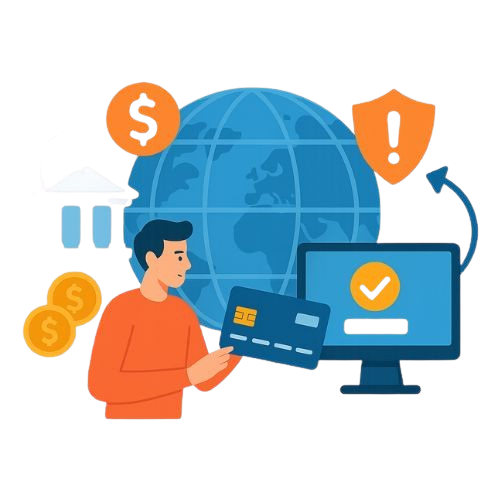
High-risk merchants often face complex challenges in processing payments efficiently while managing fraud risks, chargebacks, and regulatory requirements. Unified Payment Interfaces (UPIs) can provide a structured approach to managing transactions across multiple channels and regions, making it easier for high-risk businesses to operate globally.
What Are Unified Payment Interfaces
A Unified Payment Interface is a standardized system that allows merchants to process payments from multiple sources using a single interface. Unlike traditional setups where different payment methods require separate platforms, UPIs consolidate various channels into one manageable solution. This approach reduces errors, improves monitoring, and allows merchants to focus on business operations instead of navigating multiple payment portals.
For high-risk merchants, leveraging a high-risk merchant payment gateway through UPIs ensures that even industries with stricter regulations or higher chargeback rates can process payments without constant interruptions.
Benefits for High-Risk Merchants
Simplified Global Operations
High-risk sectors such as travel, nutraceuticals, or adult services often encounter difficulties when processing payments internationally. UPIs simplify this by connecting to global payment networks, enabling smooth cross-border transactions. Integrating a high-risk payment gateway into a UPI setup helps mitigate common issues like currency conversions, payment declines, and delayed settlements.
Reduced Transaction Failures
One of the critical issues for high-risk merchants is maintaining a high transaction success rate. A UPI centralizes payment routing and processing logic, allowing businesses to reroute failed transactions automatically. This minimizes lost sales and maintains customer trust.
Improved Monitoring and Reporting
UPIs provide comprehensive dashboards and analytics for high-risk merchants. Real-time reporting helps track payment trends, monitor suspicious activities, and manage chargebacks efficiently. Businesses can integrate these insights with existing accounting or ERP systems to maintain accurate financial records while reducing operational friction.
How UPIs Work with Online Payments
Unified Payment Interfaces are compatible with multiple payment channels, including credit cards, debit cards, virtual cards, and alternative payment methods. Merchants who want to accept payment online can consolidate these methods under a single UPI, simplifying reconciliation and reducing the chances of errors.
By combining a UPI with a high-risk payment gateway, merchants can also take advantage of fraud prevention features, chargeback management tools, and enhanced transaction tracking. This combination is particularly effective for high-risk industries, where maintaining compliance and transaction security is critical.
Key Considerations for High-Risk Merchants
While UPIs offer many advantages, high-risk merchants should evaluate providers carefully. Key factors include:
- Gateway Compatibility: Ensure the UPI integrates smoothly with a high-risk payment gateway.
- Global Coverage: Check whether the UPI supports transactions in target markets.
- Security Features: Look for systems that offer encryption, tokenization, and fraud monitoring.
- Scalability: The interface should handle increasing transaction volumes as the business grows.
WebPays provides solutions for high-risk merchants that address these needs, making it easier to adopt UPIs without facing operational roadblocks.
Conclusion
Unified Payment Interfaces are becoming essential tools for high-risk merchants who operate internationally. They simplify complex payment ecosystems, reduce transaction failures, and provide actionable insights for monitoring and reporting. When paired with a reliable high-risk payment gateway, UPIs allow merchants to focus on growing their business while minimizing payment-related risks. High-risk merchants looking to accept payment online can benefit significantly from adopting this approach, creating a more efficient and secure global payment experience.