Online Gambling Payment Gateway Solution in Europe

Get The Best Gambling Payment Gateway And Accept Online Payments From Gamers
Online gambling has grown into one of the biggest corners of e-commerce, and it keeps expanding every year by year new markets open up, more players move to mobile, and the money moving through the industry keeps climbing. But none of that works without a payment system that can actually handle it. Online Casinos, sports books, poker rooms, and gambling betting platforms all need a way to take deposits and pay out winnings quickly, securely, and without getting flagged or frozen by a bank that doesn't want the risk.
What is a gambling payment gateway?

Gambling Payment Gateway in Europe (Albania, Malta, Cyprus, Netherlands, Italy, etc.) is preferred for all sorts of online gambling and casino businesses. Comprising online games in casinos, poker, bingo, slots, and even also sports betting (sports betting), lotteries (lottery), etc.
The gambling industry, which was initiated in the late 1990s, is today one of the biggest industries of online commerce. A gambling payment gateway is the technology that sits between your gambling website and the banks or card networks, processing every deposit, withdrawal, and payout in real time. It authorizes the transaction, checks it for fraud, and moves the money — all in the few seconds between a player clicking "deposit" and seeing the funds land in their account.
There are two kinds of merchant accounts for the gambling business: coded and non-coded. Licensed or registered gambling businesses and websites acquire coded merchant accounts. Relying on the sort of online business, each platform is allotted an MCC code. For all online transactions in the gambling industry, excluding online payments by using ATMs, the MCC code 7995 is used. Also comprising opening bettings, purchasing lottery tickets, chips, tokens, or other products and services rather than funds in the gambling industry.
Require a high-risk merchant account for online gambling?
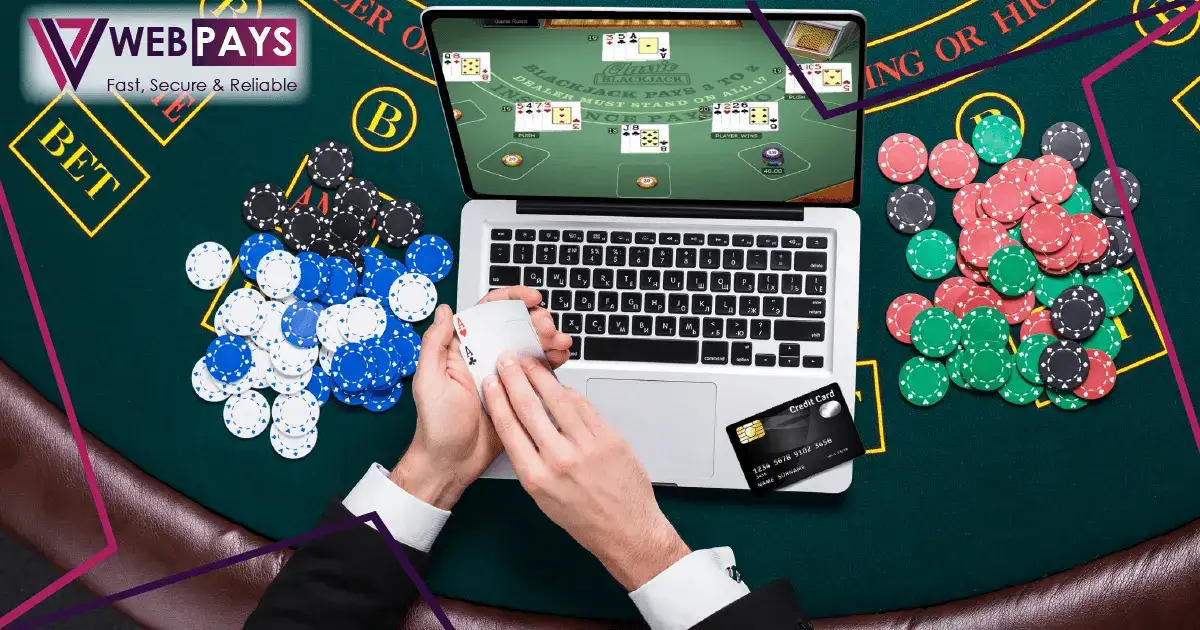
Poker is one of the most prominent games in the entire world. The activity to play poker in clubs, at parties, and in other areas is slowly transforming, and more and more lovers of this online game switch to the mobile internet to play. For instance, Texas-Hold, Five-Card Draw, Seven-Card Stud, and others.
If you are a merchant of poker games - an online business. Then you require to have a high-risk payment gateway to swiftly and potentially bring out online payment processing. While, as you understand the merchant accounts for the online poker business. It is also associated with the classification of high risk (high risk). Thus, discovering a trustworthy payment gateway provider for processing online payments is quite tricky.
Banks and conventional financial organizations that provide credit cards are scared to collaborate with high-risk businesses. Even also it is frequently very advantageous. Conceivable legal difficulties because of vague laws, a large ratio of chargebacks in online casinos, and the gambling business. Also, a high possibility of fraud is all cause for refusing applications for getting a casino merchant account. For the gambling business, you should prefer a specified high-risk payment gateway that can deliver undisturbed and potential payment allowance for your buyers. Furthermore, preferring gambling payment gateways has many benefits:
- Real-time reporting, delivering a thorough summary of all online payments.
- The capacity to take online payments from credit card networks across the globe without any problems.
- Deficiency of currency hazards and immediate online payment processing.
- The capacity to spend for products and services in various currencies, thereby developing the customer base and improving sales.
- Control of chargebacks.
- Complete anti-fraud features. Consists of completely secure SSL-encrypted servers.
Preferring a gambling payment gateway for your online gambling business

To get commenced, you will have to prefer an online gambling payment gateway provider to incorporate with your recent payment strategy, create your online shopping cart, and process all your customers' online transactions similar to how payments are processed in-store securely. Here are many things to regard as you explore different payment gateway providers:
Regard these things before exploring the gambling payment gateway
Here are some primary factors to consider before finalizing a gambling payment gateway:
Your buyers experience
It is a basic knowledge within the industry that delivering your buyers more methods to pay forms a more profitable and seamless customer experience. Amazing customer experiences result in getting repeat buyers, which frequently directs to buyer commitment, considerations, and elongation of more benefits. Integrating an online element is a great move toward making a positive experience in your buyer's mentality./
Technology and functionality
Talking about customer experience, you like to ensure your online merchant account provider can help with the sort of functionality (i.e., documenting, emailed tokens). However, that best fits your online business and pleads to your buyers. Effortless integration is essential. Your payment gateway provider should deliver the flexibility that enables you to operate business both today and as your business expands in the future. Opt for a payment gateway provider that is frequently producing new methods to boost user experience and comfort of use.
Your business's geographic location and establishment

Where your business is situated and where your payment service provider is situated can make a dissimilarity in how you integrate your business, which is what most payment gateway providers will expect from you. This implies there are multiple sets of incorporation laws for a European business pursuing an online payment processing service from a payment gateway provider in Europe and so on. It is essential to understand that information earlier in time to allow you to take online payments faster.
Your business structure, products, and services
The sort of business you have is precisely as essential as the kind of payment gateway provider you prefer. Most payment processors don't serve businesses and services that are regarded as "high risk." So, before you make a choice, preserve yourself some time by ensuring the payment processor you prefer doesn't place your online business in that particular category. Instances of some high-risk industries are:
- Gaming
- Gambling
- Dating
- Traveling
- Adult entertainment
- Forex industry
- Subscription-based businesses
- Debt Collection
The pricing structure, costs, and service value
How much profit do you earn on a single sale? What's your average spending limit? Understanding your business values is primary when you are bargaining payment processing costs. Keep in mind always, yet, that the lower fees don't always represent the most satisfactory value for your gambling business. Most international payment gateway providers will brag about lower fees to tempt you. But will your website look better and feel allure buyers to you? To get the best smash for your single euro. Then opt for a translucent fee structure with no concealed prices in the final quote, a good transformation rate, and value-added payment services.
Technical and customer service
There's nothing more harmful than failing to complete a sale because of a technical error or not being capable to take online payment. Because you are not sure about how your payment gateway processor functions. Make sure that the online payments processor you prefer provides live support from an attentive team or dedicated manager.Payment security features

You may deliver the best online product or service possible. But if buyers don't feel secure while shopping on your website. So, it will be typical for you to conduct a sale.
Your payment gateway provider should at least fulfill these minimum requirements to handle the standard exposures:
- Payment Card Industry Data Security Standard (PCI DSS) obedience on their end.
- Maximum security of buyer's data, comprising card details reserving, tokenization, confirmation from credit card networks, etc.
- Features to assist you in meeting and maintaining PCI compliance for your online gambling business.
Get a gambling payment gateway by WebPays
We, WebPays are one of the leading providers of gambling payment gateways in Europe (Albania, Malta, Cyprus, Netherlands, Italy, etc.) for small and medium-sized businesses. With us, you will accept particular and cost-effective payment services at reasonable prices for high-quality payment processing services and 24*7 technical and customer service available. We have made robust and trustworthy connections with acquiring banks across the globe. And which will enable you to deliver your online gambling services with the most advantageous conditions. So, contact us today to get an adequate payment solution.