
If you’ve ever set up payments for your business, you’ve probably come across terms like “credit card merchant account” and “payment gateway” — often in the same breath. But here’s the thing: they’re not the same, and mixing them up can lead to some costly misunderstandings.
Think of it this way — each one plays a separate role in getting money from your customer’s card to your bank account. And if you’re trying to choose the right setup for your business, knowing exactly what each one does (and doesn’t do) makes all the difference.
Webpays breaking it all down — what a merchant account actually is, how a payment gateway fits into the picture, and how to figure out which combination works best for the way you do business.
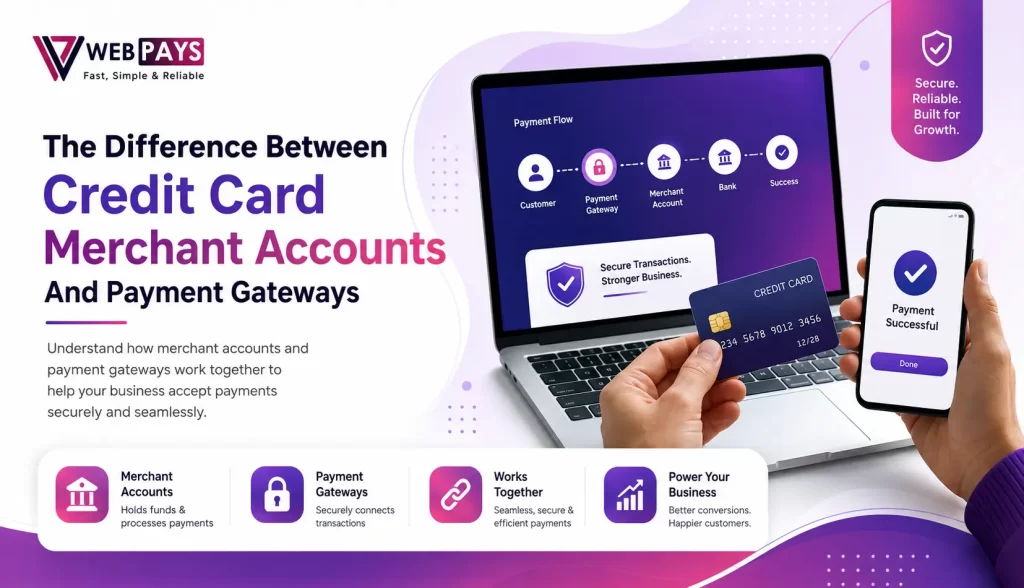
What Is a Credit Card Merchant Account?
A credit card merchant account is a type of business bank account that allows a company to accept credit card payments. This account acts as an intermediary between your business’s bank and the credit card networks, facilitating the transfer of funds from a customer’s account to your business’s account.
Key Functions of a Credit Card Merchant Account:
1. Fund Storage: It temporarily holds the funds from credit card transactions before they are transferred to your business’s actual bank account. This process involves a series of steps, including authorization, settlement, and transfer.
2. Transaction Authorization: The merchant account verifies that the credit card transaction is legitimate and that the customer has sufficient credit.
3. Settlement: After the transaction is authorized, the funds are transferred from the customer’s credit card issuer to your merchant account, and then to your business’s bank account.
4. Chargeback Management: The merchant account also handles disputes or chargebacks where customers contest a transaction.
To open a credit card merchant account, businesses typically need to undergo a vetting process that includes a review of financial history, business practices, and sometimes a credit check. This account is crucial for businesses that wish to accept credit card payments either online or in-person.
What Is a Payment Gateway?
A payment gateway, on the other hand, is a technology that facilitates the transfer of payment information from a customer to the merchant’s bank and vice versa. It acts as a digital bridge that securely transmits transaction data, ensuring that sensitive credit card information is encrypted and safely processed.
Key Functions of a Payment Gateway:
1. Data Encryption: The gateway encrypts customer payment information to protect it from unauthorized access during transmission.
2. Transaction Processing: It transmits transaction details to the payment processor, which then communicates with the credit card issuer to authorize or decline the payment.
3. Integration: Payment gateways integrate with various shopping carts and e-commerce platforms to streamline the payment process.
4. Real-time Reporting: They provide real-time updates and reports on transaction status, allowing businesses to track payments efficiently.
Payment gateways are essential for online businesses, as they ensure that credit card information is handled securely and that transactions are processed smoothly. They work in tandem with merchant accounts but do not replace them.
Comparing Credit Card Merchant Accounts and Payment Gateways
While both credit card merchant accounts and payment gateways are vital for processing credit card transactions, their functions and responsibilities are quite different. Here’s a comparative overview:
| Aspect | Credit Card Merchant Account | Payment Gateway |
| Primary Function | Holds and transfers funds from credit card transactions | Encrypts and transmits payment data securely |
| Role in Transactions | Acts as the intermediary for funds transfer | Facilitates the secure transfer of payment information |
| Integration | Not a technological component but a financial service | Technological tool that integrates with e-commerce systems |
| Compliance | Must comply with financial regulations (e.g., PCI-DSS) | Must comply with security standards for data encryption |
| Use Case | Required for any business that wants to accept credit card payments | Essential for processing payments online or in-person |
How They Work Together
In a typical credit card transaction, the payment gateway and credit card merchant account work in tandem:
1. Transaction Initiation: A customer initiates a transaction on your website or in-store by entering their credit card information.
2. Data Encryption: The payment gateway encrypts this information and sends it to the credit card processor.
3. Authorization: The processor communicates with the credit card issuer to approve or decline the transaction.
4. Funds Transfer: If approved, the funds are first moved to your credit card merchant account and then transferred to your business’s bank account.
5. Confirmation: The payment gateway sends a confirmation of the transaction back to your business and the customer.
Choosing the Right Solutions for Your Business
For businesses looking to accept credit card payments, it’s important to choose both a reliable credit card merchant account and a secure payment gateway. Here are some considerations:
● Business Type: Online businesses need a robust payment gateway for secure transactions, while brick-and-mortar stores require a merchant account for handling card payments.
● Transaction Volume: High-volume businesses may benefit from merchant accounts with lower transaction fees and payment gateways that offer advanced fraud protection features.
● Integration Needs: Ensure that the payment gateway you choose integrates seamlessly with your existing e-commerce platform or point-of-sale system.
● Security Requirements: Both your merchant account and payment gateway should comply with PCI-DSS standards to ensure the highest level of security.
Ready to streamline your payment processing? At WebPays, we offer tailored solutions to meet your needs for both Credit Card Merchant Accounts and Payment Gateways. Contact us today to get started and ensure a smooth, secure payment experience for your business.
Conclusion
Summing it up, while both a Credit Card Merchant Account and a Payment Gateway are essential for processing credit card payments, they serve distinct roles. The merchant account handles the financial transactions, while the gateway ensures secure data transmission. Understanding these differences helps in choosing the right solutions for your business needs. For a streamlined and secure payment setup, WebPays offers efficient and best in class credit card merchant account solutions. Contact WebPays today to optimize your payment processing and enhance your customer experience.