
Most people who ask this question already own one of these things — they just don’t fully understand what they’re holding. They downloaded an app, they bought some Bitcoin or ETH, and now they’re staring at a seed phrase written on a Post-it note wondering if they’ve done this correctly.
So before we compare, let’s establish what each of these things actually is — not the marketing version, the real one
What Is a Crypto Wallet, Really?
Here’s the first thing that trips people up: a crypto wallet does not store your cryptocurrency.
Your crypto never moves from the blockchain. What a wallet stores is your private key — a cryptographic string of characters that proves ownership and authorises transactions. Lose the private key, lose the crypto. No customer support line, no password reset, no escalation path. Gone.
Think of it this way: the blockchain is a giant public notice board where all ownership records are permanently inscribed. Your private key is the only pen that can write your name on it. A crypto wallet is the case that holds the pen.
That reframe changes how you should think about wallet security entirely
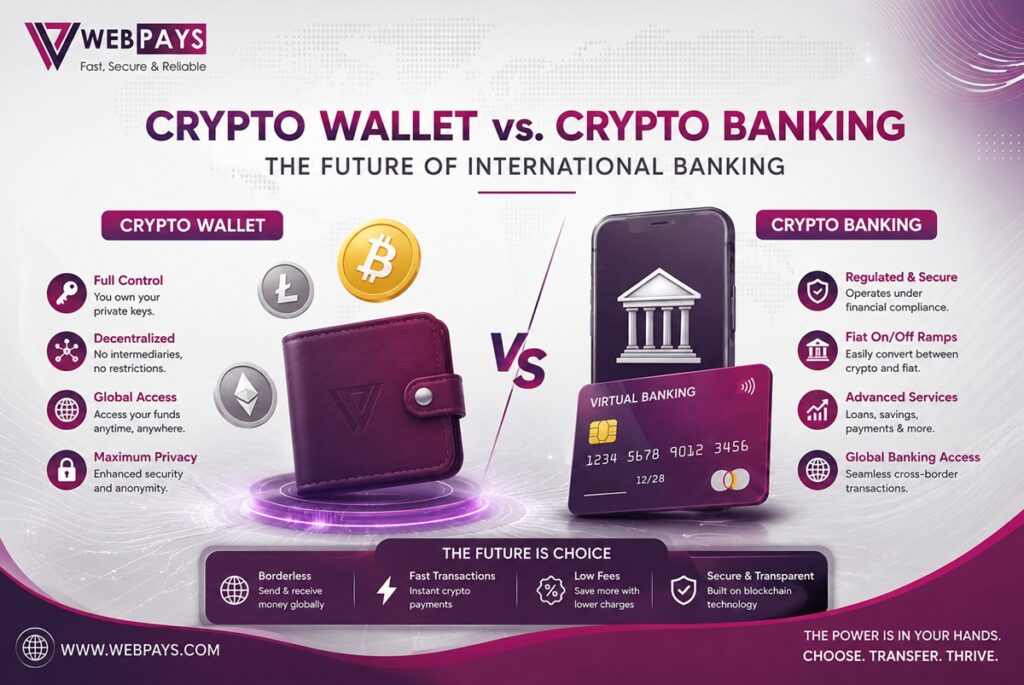
The Three Types of Crypto Wallets You Need to Know
Custodial wallets
Are held by a third party — usually a centralised exchange like Coinbase, Binance, or Kraken. You log in with a username and password. The exchange holds the actual private keys. You have an account with them, not direct blockchain ownership. The upside is convenience and account recovery. The downside is the famous phrase in crypto: not your keys, not your coins. If the exchange gets hacked, freezes withdrawals, or goes bankrupt (as FTX spectacularly did in 2022), your funds can be at risk.
Non-custodial wallets
Give you full control. MetaMask, Trust Wallet, Phantom — these apps generate and store your private keys locally on your device. When you set one up, you’re given a 12 or 24-word seed phrase. That phrase is your wallet. Anyone with those words can access your funds from any device, anywhere in the world. Write it down. Store it offline. Never photograph it. Never type it into any website.
Hardware wallets
Are the gold standard for serious holders. Devices like Ledger and Trezor store private keys on a physical chip that never connects directly to the internet. To sign a transaction, you physically press a button on the device. Even if your computer is compromised with malware, the keys stay safe. If you’re holding more than a few hundred dollars in crypto for the long term, a hardware wallet is not optional — it’s basic hygiene.
Hot vs. Cold: The Temperature Analogy
You’ll often hear wallets described as “hot” or “cold.” Hot wallets are connected to the internet — convenient for daily use but more exposed to attacks. Cold wallets are offline — less convenient but far more secure. Most experienced crypto holders use both: a hot wallet for spending and interaction, a cold wallet for saving
What Is Crypto Banking?
Crypto banking is a fundamentally different category. Where a wallet is an ownership tool, a crypto bank is a financial services platform built around your digital assets.
Think of everything a traditional bank does: it holds your money, pays you interest on savings, lends you money against collateral, gives you a debit card, processes payments. Crypto banking platforms do the same — but the underlying assets are Bitcoin, Ethereum, stablecoins, and other digital currencies.
Platforms like inquid, webpay, Maple Finance, and Arch (for high-net-worth users) offer services like:
Yield accounts — Deposit USDC or BTC and earn interest, often significantly higher than traditional savings rates, though with correspondingly higher risk
Crypto-backed loans — Borrow fiat currency (dollars, euros) using your crypto as collateral, without selling it and triggering a taxable event
Crypto debit cards — Spend your crypto holdings in real-world stores, with automatic conversion at point of sale
Institutional custody — For businesses and funds that hold significant crypto positions and need regulated, insured storage
The important nuance here: most crypto banks are not traditional banks. They don’t hold a banking licence in the way that Chase or Barclays does. They’re not FDIC or FSCS insured. In a stress scenario — a market crash, a liquidity crunch, a regulatory action — your funds could be at risk in ways that are quite different from a traditional bank failure. Celsius Networ went bankrupt in 2022 with $4.7 billion in customer assets locked inside. Users waited years through bankruptcy proceedings to recover a fraction of their funds.
This isn’t an argument against crypto banking. It’s an argument for understanding exactly what you’re signing up for.
How Crypto Payments Work: From Checkout to Settlement
Crypto payments have matured considerably in the last three years. What was once a fringe payment method that required sending exact amounts to wallet addresses within a narrow time window is now, in many implementations, nearly as seamless as tapping a card.
Here’s how a modern crypto payment flows:
A customer arrives at the checkout on an e-commerce site. They select “Pay with crypto.” A payment processor — Inquid, Webpays, NOWPayments, or Strike — generates a unique payment request with a QR code. The customer scans it with their wallet app. The transaction is broadcast to the relevant blockchain network. Confirmation happens within seconds (for networks like Solana or using the Lightning Network for Bitcoin) to a few minutes (for on-chain Bitcoin or Ethereum). The merchant receives settlement — typically in stablecoins or converted to fiat — within 24 hours.
Stablecoins Are the Real Story
One thing that often gets missed in crypto payment discussions is that the most practical crypto for everyday payments isn’t Bitcoin. It’s stablecoins — cryptocurrencies pegged to a fiat currency, most commonly the US dollar.
USDC and USDT are the two dominant examples. They combine the programmability and borderless nature of blockchain with price stability. A merchant accepting USDC doesn’t worry about the payment losing 15% of its value between checkout and settlement. An international freelancer invoicing in USDC gets paid in something that holds its value regardless of whether their local currency is depreciating.
For cross-border B2B payments in particular, stablecoin rails are genuinely faster and cheaper than traditional wire transfers — especially into markets where banking infrastructure is unreliable or correspondent banking fees are punishing.
Fees and Speed: An Honest Comparison
On Bitcoin’s base layer, transaction fees can spike unpredictably during network congestion. The Lightning Network solves this — it enables near-instant Bitcoin payments for fractions of a cent, but requires both parties to have Lightning-compatible wallets and sufficient channel liquidity. For consumer payments, this is manageable. For programmatic B2B flows, it requires technical investment.
Ethereum’s base layer fees (“gas”) have historically been expensive during high-activity periods. Layer 2 networks like Arbitrum, Optimism, and Base dramatically reduce this — transactions that might cost $10 on Ethereum mainnet cost under $0.01 on a well-functioning L2.
If you’re evaluating crypto payments for your business, the network choice matters as much as the wallet or processor choice. USDC on Solana is a very different cost and speed profile than ETH on Ethereum mainnet.
Is Crypto Banking Safe? The Regulatory Landscape
This is the question most platforms would prefer you didn’t ask directly. Here’s the honest answer: it depends on where you are, which platform you’re using, and how the platform is structured.
In the United States, crypto banking platforms are subject to a patchwork of state and federal regulations. The SEC has pursued enforcement actions against several platforms for offering yield products that it deems unregistered securities. The OCC has issued guidance on stablecoin custody. There is no comprehensive federal crypto banking framework yet, though the FIT21 Act (Financial Innovation and Technology for the 21st Century) represents a significant step toward one.
In the European Union, MiCA (Markets in Crypto-Assets) regulation came into full effect in 2024 and created a unified licensing framework for crypto asset service providers — including custody, exchange, and lending services. This is the most comprehensive crypto banking regulatory regime in the world so far.
In India, crypto is taxed as a virtual digital asset with a flat 30% rate on gains, but there is no specific licensing framework for crypto banking services as of mid-2025. Platforms operating here do so under general financial services regulations.
The practical upshot: if a platform is MiCA-licensed in the EU, or holds a BitLicence in New York, or is registered with FinCEN, those are signals of regulatory engagement. Platforms operating with no clear regulatory home, or domiciled in opaque offshore jurisdictions, carry meaningfully higher counterparty risk.
Wallet vs. Crypto Bank: Which Do You Actually Need?
The honest answer: probably both, for different purposes.
Crypto wallet – (specifically a non-custodial one, ideally hardware-backed) for long-term holdings, DeFi interaction, and any situation where you want direct ownership of your assets. This is your savings layer.
Crypto banking platform – for yield generation on idle stablecoins, borrowing against holdings you don’t want to sell, and accessing crypto-native financial products. But treat it like you’d treat a money market fund — not a savings account. Understand the counterparty risk, check the platform’s reserve and audit disclosures, and don’t park more there than you’re prepared to see frozen in a worst-case scenario.
Crypto payment infrastructure – for your business if you’re transacting internationally, dealing with markets where card acceptance is low, or servicing customers who genuinely prefer to pay in digital assets. Start with stablecoins and a reputable payment processor. Don’t build custom wallet infrastructure when off-the-shelf solutions already handle the complexity.
The crypto space rewards people who understand the technology well enough to use it intentionally — and penalises those who treat it like a slightly different version of internet banking. The underlying mechanics are genuinely different. The custody model is different. The risk model is different.