
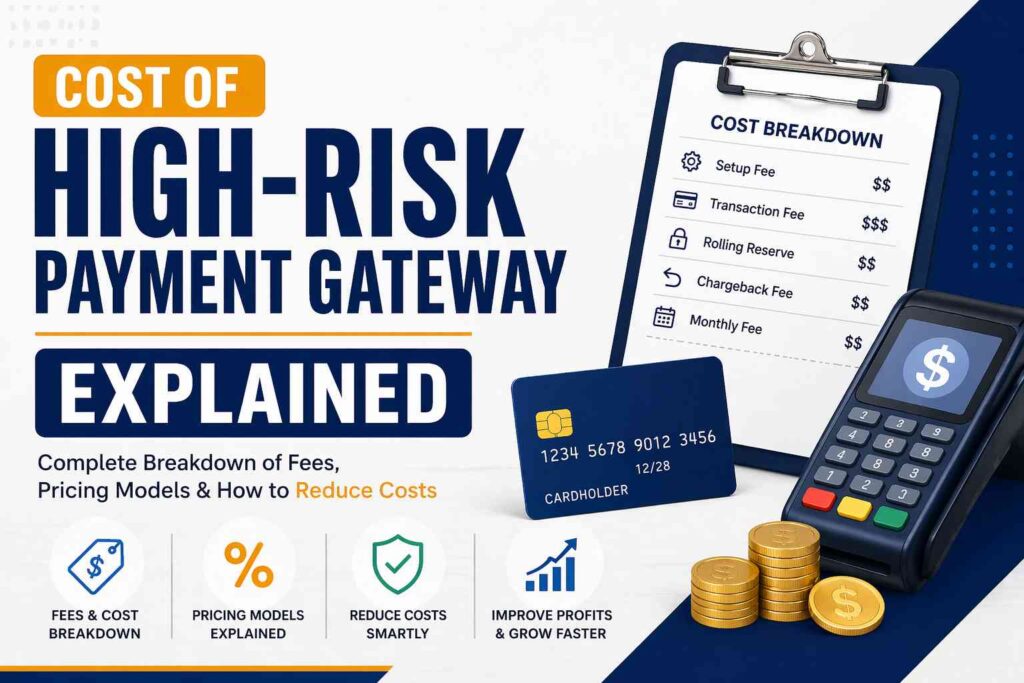
Complete Breakdown of Fees, Pricing Models, and How to Reduce Costs
If you operate in a high-risk industry, understanding payment processing costs is not optional—it directly impacts your margins, approval rates, and scalability.
Most businesses enter high-risk payment processing without clarity on pricing. The result? Hidden fees, low approval rates, and unstable cash flow.
This guide breaks down the real cost of a high-risk payment gateway, what drives those costs, and how to optimize your setup for better performance.
What is a High-Risk Payment Gateway?
A high-risk payment gateway is a specialized payment solution designed for businesses that traditional providers typically avoid due to increased financial and regulatory risk.
If you are actively searching for a high-risk payment gateway, it usually means your business operates in a segment where payment stability is critical but harder to achieve.
Industries commonly classified as high-risk include:
- Online gaming and betting platforms
- IPTV and streaming services
- Forex and crypto businesses
- Subscription-based models
- Adult and digital services
These industries require customized payment infrastructure, not standard solutions
Why High-Risk Payment Gateways Cost More
High-risk pricing is not arbitrary—it is directly tied to risk exposure.
Payment providers account for:
- Higher probability of chargebacks
- Fraud-related risks
- Regulatory scrutiny
- Cross-border transaction complexities
Because of this, businesses using a payment gateway for high-risk businesses typically pay more than standard merchants.
Complete Cost Breakdown of High-Risk Payment Gateways
Understanding each cost component helps you avoid overpaying and negotiate better terms.
1. Setup and Onboarding Fees
Most providers charge an initial setup fee for:
- Risk assessment
- Underwriting
- Technical integration
Typical range:
- $0 to $1,000+
A reliable high-risk merchant account setup often includes deeper due diligence, which is why this fee exists.
2. Transaction Processing Fees
This is the most significant cost factor.
High-risk businesses generally pay:
- 3% to 10% per transaction
- Sometimes higher depending on risk level
Your rate depends on:
- Industry type
- Chargeback history
- Monthly processing volume
- Target regions
Using a well-optimized payment gateway solution can help improve approvals and offset higher fees.
3. Rolling Reserve Requirements
A rolling reserve is a percentage of your revenue held temporarily to cover potential disputes.
Typical structure:
- 5% to 10% reserve
- Held for 90 to 180 days
While this affects cash flow, it is standard in high-risk processing and varies based on your risk profile.
4. Chargeback Fees
Each chargeback results in a penalty fee.
Typical cost:
- $15 to $50 per chargeback
More importantly, excessive chargebacks can:
- Increase processing fees
- Trigger stricter reserve terms
- Lead to account termination
5. Monthly and Gateway Fees
Some providers charge recurring fees for maintaining your account and infrastructure.
These may include:
- Gateway access
- Reporting tools
- Fraud management systems
Typical range:
- $20 to $200 per month
6. Currency Conversion and Cross-Border Fees
If your business accepts international payments, additional charges apply.
Typical range:
- 1% to 3% per transaction
These costs depend on your payment flow and supported currencies.
7. Payout and Settlement Fees
Some providers charge fees for transferring funds to your bank account.
Factors include:
- Settlement frequency
- Currency type
- Banking partners
What Actually Determines Your Pricing?
There is no fixed pricing model for high-risk businesses.
Your final cost depends on:
Business Model
Gaming, betting, and financial services typically have higher fees.
Chargeback Ratio
Lower dispute rates improve your pricing significantly.
Processing Volume
Higher volume gives you better negotiation leverage.
Target Markets
Certain regions increase risk exposure and cost.
Payment Methods
Supporting multiple payment options can impact pricing structure.
How to Reduce High-Risk Payment Gateway Costs
You cannot eliminate high-risk fees, but you can optimize them.
1. Reduce Chargebacks
- Implement fraud prevention systems
- Improve customer communication
- Maintain clear refund policies
Lower chargebacks = better pricing over time.
2. Optimize Your Payment Setup
Using a properly configured high-risk payment gateway improves:
3. Choose the Right Payment Partner
Not all providers are equal.
A strong provider helps you:
- Reduce unnecessary declines
- Improve routing efficiency
- Maintain stable processing
4. Improve Approval Rates
Higher approval rates mean:
- More completed transactions
- Better revenue flow
- Stronger negotiation power
Hidden Costs You Must Watch Out For
Many businesses underestimate hidden charges.
Be cautious of:
- Undisclosed setup fees
- Early termination penalties
- Excessive reserve requirements
- Unclear payout timelines
Always request complete transparency before onboarding.
Is a High-Risk Payment Gateway Worth the Cost?
Yes—if implemented correctly.
Without a reliable payment infrastructure:
- Transactions fail frequently
- Revenue becomes inconsistent
- Growth becomes limited
With the right setup:
- Approval rates improve
- Customer experience becomes smoother
- Revenue stabilizes
Why Businesses Choose WebPays
WebPays provides payment solutions specifically designed for high-risk industries.
With WebPays, you get:
- Competitive pricing based on your risk profile
- Optimized routing for higher approvals
- Advanced fraud and chargeback control
- Global payment support
- Dedicated onboarding and support
This ensures you are not just paying for processing—you are investing in a system that supports growth.
Conclusion
The cost of a high-risk payment gateway is not just about fees—it is about performance, reliability, and long-term scalability.
Choosing the wrong provider can cost more in lost revenue than in fees.
Choosing the right one helps you:
- Maximize approvals
- Reduce risk
- Scale globally with confidence
Get a Custom Pricing Plan for Your Business
If you want a clear breakdown of your actual costs and how to reduce them:
- Get a tailored pricing estimate
- Identify ways to lower your processing fees
- Set up a high-performance payment system
Apply now to get a high-risk payment gateway customized for your business and start processing payments without limitations.
Frequently Asked Questions (FAQs)
Q1. How much does a high-risk payment gateway cost?
High-risk payment gateways typically charge 3% to 10% per transaction, along with setup fees, reserves, and monthly costs depending on the business risk profile.
Q2. Why are high-risk payment gateways expensive?
They involve higher fraud risk, chargebacks, and compliance requirements, which increases processing costs.
Q3. Can I reduce high-risk payment processing fees?
Yes, by reducing chargebacks, optimizing routing, and choosing the right provider.
Q4. What is a rolling reserve?
A rolling reserve is a percentage of revenue held temporarily to cover potential disputes or chargebacks.