
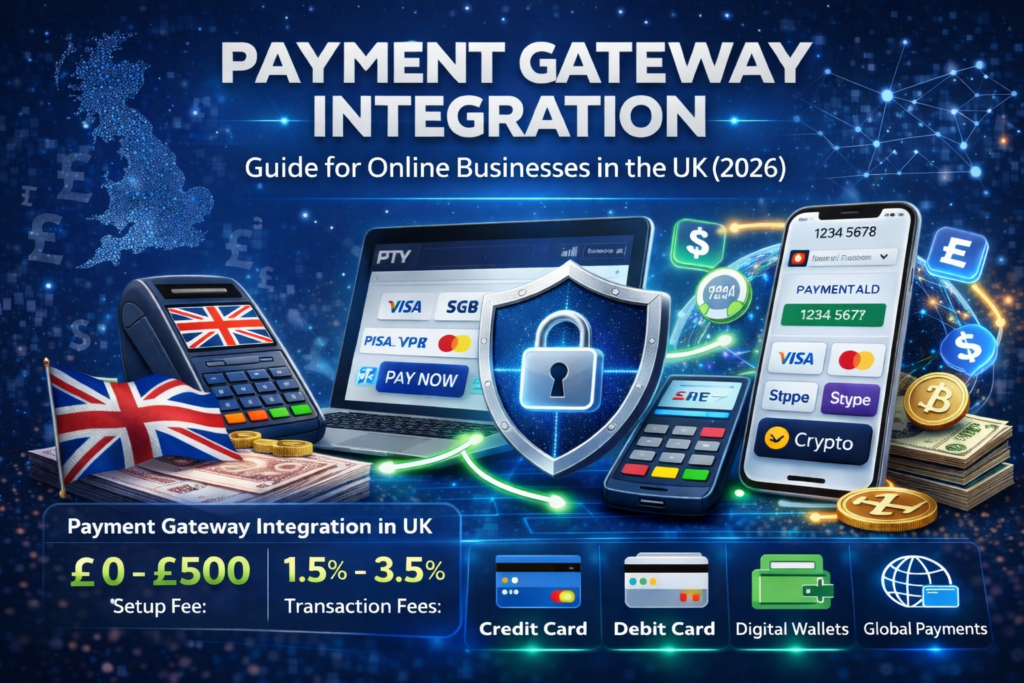
As digital commerce continues to grow worldwide, businesses must provide secure and seamless payment experiences to their customers. Whether you operate an ecommerce store, SaaS platform, subscription service, or digital marketplace, enabling online payments is essential.
This is where payment gateway integration becomes a critical part of modern business infrastructure.
Payment gateway integration allows businesses to securely accept payments from customers through credit cards, debit cards, digital wallets, and other online payment methods. Without proper integration, businesses cannot process transactions efficiently, which can lead to lost revenue and poor customer experience.
In this guide, we explain what payment gateway integration is, how it works, its benefits, and the payment gateway integration cost in the UK. This article will help businesses understand how to implement payment systems successfully.
What Is Payment Gateway Integration?
Payment gateway integration is the process of connecting a payment gateway system with a website, mobile application, or online platform so businesses can securely accept payments from customers.
A payment gateway acts as the technology that transfers payment data between:
- the customer
- the merchant website
- the payment processor
- the issuing bank
When a customer makes a purchase online, the payment gateway encrypts the payment details and sends the transaction request to the customer’s bank for approval.
This process ensures that online payments are processed securely, quickly, and reliably.
How Payment Gateway Integration Works
Understanding how payment gateway integration works helps businesses implement payment systems correctly.
Step 1: Customer Initiates Payment
A customer selects a product or service and proceeds to the checkout page.
Step 2: Customer Enters Payment Details
The customer enters payment information such as:
- credit card number
- debit card details
- digital wallet information
Step 3: Data Encryption
The payment gateway encrypts sensitive payment data to ensure security.
Step 4: Authorization Request
The encrypted transaction data is sent to the payment processor and issuing bank for verification.
Step 5: Bank Approval or Rejection
The issuing bank verifies the transaction and either approves or declines the payment.
Step 6: Payment Confirmation
Once approved, the payment gateway sends confirmation back to the merchant website and the transaction is completed.
This entire process usually takes only a few seconds.
Types of Payment Gateway Integration
Businesses can choose different payment gateway integration methods depending on their technical requirements.
Hosted Payment Gateway
With hosted gateways, customers are redirected to the payment provider’s website to complete the transaction.
Advantages:
- easier integration
- strong security compliance
- minimal development effort
Hosted gateways are commonly used by small businesses and startups.
API Payment Gateway Integration
API integration allows businesses to integrate payment gateways directly into their websites or applications.
Advantages:
- fully customizable checkout experience
- seamless user interface
- complete control over branding
However, API integrations require developer expertise.
Self-Hosted Payment Gateway
In self-hosted integration, payment details are collected on the merchant’s website before being sent to the gateway for processing.
This approach requires strong security measures and compliance with PCI DSS standards.
Benefits of Payment Gateway Integration
Integrating a payment gateway offers several advantages for online businesses.
Secure Online Payments
Payment gateways use advanced encryption and security protocols to protect customer payment data.
Global Payment Acceptance
Businesses can accept payments from customers worldwide using multiple currencies.
Faster Transactions
Automated payment processing ensures quick payment authorization and confirmation.
Better Customer Experience
A smooth checkout experience reduces cart abandonment and improves customer satisfaction.
Support for Multiple Payment Methods
Payment gateways allow businesses to accept payments through:
- credit cards
- debit cards
- digital wallets
- bank transfers
- alternative payment methods
Payment Gateway Integration Cost in UK
One of the most common questions businesses ask before implementing a payment system is how much payment gateway integration costs in the UK.
The cost of integrating a payment gateway varies depending on several factors such as the provider, integration method, and business type.
Below are the most common cost components businesses should consider.
Setup Fees
Some payment gateway providers charge a one-time setup fee to configure the gateway and create a merchant account.
Typical setup fees in the UK range from:
£0 to £500
Many modern payment providers offer free setup to attract new merchants.
Transaction Fees
Transaction fees are the most common cost associated with payment gateway integration.
Businesses usually pay a percentage of each transaction processed.
Typical transaction fees in the UK:
- 1.5% – 3.5% per transaction
- additional £0.20 – £0.30 fixed fee per transaction
High-risk industries such as gaming, IPTV, or forex may have slightly higher processing fees.
Monthly Gateway Fees
Some payment providers charge a monthly maintenance fee for using the payment gateway.
Typical monthly fees range between:
£10 – £50 per month
However, some providers offer no monthly fees.
Chargeback Fees
If a customer disputes a payment, the payment processor may charge a chargeback fee.
Typical chargeback fees in the UK:
£15 – £25 per dispute
Managing fraud and chargebacks effectively helps businesses reduce these costs.
Development and Integration Costs
If businesses choose API payment gateway integration, they may require developer support.
Typical development costs:
£200 – £2000 depending on integration complexity.
Many ecommerce platforms like Shopify, WooCommerce, and Magento provide ready-made plugins, which reduce integration costs significantly
Factors That Affect Payment Gateway Integration Cost
Several factors influence the total cost of payment gateway integration.
Business Industry
High-risk industries may pay higher transaction fees due to increased chargeback risk.
Transaction Volume
Businesses processing large payment volumes may negotiate lower fees.
Payment Methods Supported
Supporting multiple payment methods can increase integration complexity.
International Payments
Businesses accepting global payments may incur additional currency conversion fees.
Common Payment Gateway Integration Challenges
Although payment gateway integration provides many benefits, businesses may face several challenges during implementation.
Technical Complexity
API integrations may require experienced developers.
Compliance Requirements
Payment systems must comply with security standards such as PCI DSS.
Fraud Prevention
Businesses must implement security measures to prevent fraudulent transactions.
How WebPays Supports Payment Gateway Integration
Reliable payment infrastructure is essential for online businesses that need secure payment processing.
WebPays provides payment gateway solutions designed to support global businesses and high-risk industries.
WebPays helps businesses with:
- secure payment gateway integration
- global payment processing
- multi-currency transactions
- scalable payment infrastructure
These solutions allow businesses to accept payments securely while maintaining a smooth checkout experience.
Steps to Integrate a Payment Gateway
Businesses can follow these steps to integrate a payment gateway successfully.
- Choose a reliable payment gateway provider
- Create a merchant account
- Obtain API credentials
- Integrate the payment gateway with the website or application
- Test the payment system before launching
Testing ensures smooth transactions and prevents payment failures.
Frequently Asked Questions
What is payment gateway integration?
Payment gateway integration is the process of connecting a payment system with a website or application so businesses can accept online payments securely.
How long does payment gateway integration take?
Hosted gateways can be integrated within a few hours, while API integrations may take several days depending on complexity.
How much does payment gateway integration cost in the UK?
Payment gateway integration costs in the UK typically include setup fees (£0–£500), transaction fees (1.5%–3.5%), and optional monthly gateway fees depending on the provider.
Is payment gateway integration secure?
Yes. Payment gateways use encryption, tokenization, and fraud detection systems to ensure secure payment processing.
Conclusion
Payment gateway integration is an essential component of modern online businesses.
By implementing a reliable payment gateway, companies can securely process transactions, improve customer experience, and expand their global reach.
Understanding the payment gateway integration process and cost in the UK helps businesses make informed decisions when selecting the right payment infrastructure.
With the right payment system in place, businesses can focus on growth while ensuring secure and efficient payment processing.