
A gaming payment gateway is the technology layer that authorizes, encrypts, and routes a payment between a player and an operator’s platform — whether that’s an online casino, a sportsbook, or an in-game store. A gambling payment gateway does the same job but is built specifically around the regulatory, chargeback, and fund-segregation rules that apply to real-money wagering. Both sit between the player chosen payment method and the bank networks that ultimately move the funds.
If you operate in this space, understanding the difference — and the overlap — between these two terms matters, because it determines which provider requirements actually apply to your business.
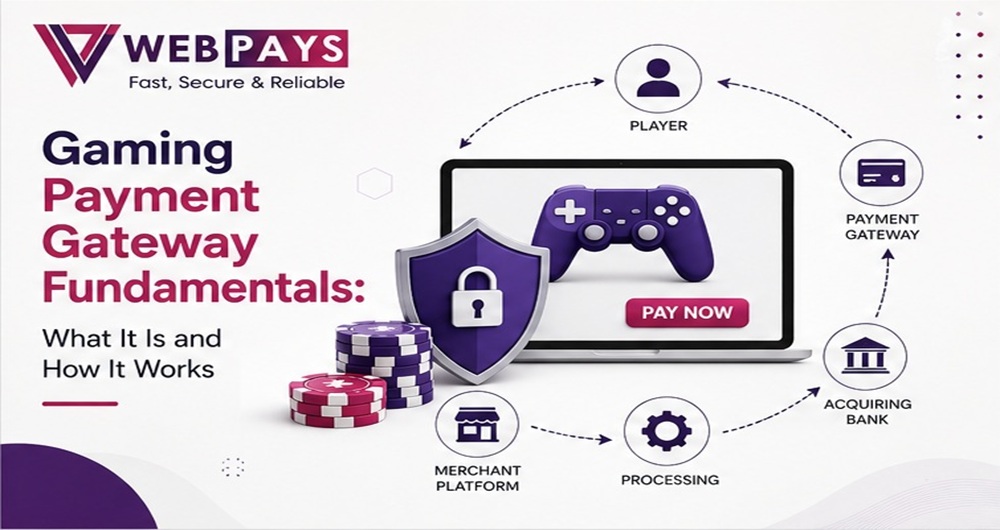
What Does a Gaming Payment Gateway Actually Do?
At a technical level, a gaming payment gateway performs four jobs on every transaction:
- Collects payment data from the player at checkout (card, e-wallet, or bank details)
- Encrypts and tokenizes that data so it never touches the operator’s servers in raw form
- Routes the authorization request to the acquiring bank or card network
- Returns an approval or decline in real time, typically in under two seconds
For gambling specifically, a fifth job is added: compliance screening. This includes age verification, KYC checks, and — in regulated markets — Anti-Money Laundering (AML) transaction monitoring before funds ever reach a player’s gaming balance.
Gaming vs. Gambling Payment Gateway: Why the Distinction Matters
The term “gaming payment gateway” is used in two very different contexts online:
- Video game / esports monetization — in-game purchases, microtransactions, web-shop subscriptions
- iGaming / real-money gambling — casino deposits, sports betting, poker, bingo
A gambling payment gateway is a specialized subset built for the second category. It carries obligations that pure video-game payment tools don’t need, including:
| Requirement | Video Game Payment Gateway | Gambling Payment Gateway |
| Age verification | Optional | Mandatory in most jurisdictions |
| Licensing checks | Not required | Required per jurisdiction |
| Player fund segregation | Rare | Often legally mandated |
| Chargeback exposure | Low-moderate | High |
| MCC classification | General retail/software | High-risk |
If your platform involves real-money wagering, you need a provider built around the second column — not a generic e-commerce or in-app-purchase gateway repurposed for gambling.
Why Gambling Is Classified as High-Risk
Banks and card networks flag gambling as high-risk for three concrete reasons: elevated chargeback ratios (players disputing losses), regulatory exposure across jurisdictions with different licensing rules, and historical association with money laundering in unregulated markets. This classification isn’t a judgment on your business — it’s a risk-pricing decision that shapes which acquiring banks will even consider your application, and at what fee.
How Webpays Approaches Gambling Payment Gateway Fundamentals
Most generic payment providers decline gambling merchants outright, or approve them and then quietly terminate the account once chargeback ratios rise. Webpays is built specifically around gambling and iGaming from day one, which changes the fundamentals in a few concrete ways:
- Purpose-built underwriting — Webpays evaluates gambling applications against gambling-specific risk models, rather than applying generic e-commerce underwriting and rejecting on volume or vertical alone.
- Dedicated MCC handling — transactions are coded and routed correctly from the start, reducing the account-freeze risk that comes from misclassified high-risk traffic.
- Compliance built in, not bolted on — KYC, AML monitoring, and jurisdictional licensing checks run as part of the core flow, not as an add-on integration.
- Stability over generic processors — because gambling is the core business rather than a side vertical, Webpays doesn’t de-risk out of the category when chargeback ratios fluctuate, which is a common failure point with non-specialist gateways and merchant account providers.
FAQ: Gaming Payment Gateway Fundamentals
1. What is the difference between a payment gateway and a payment processor for gaming?
A payment gateway captures and encrypts the transaction data and routes the authorization request; a payment processor is the back-end system that actually moves funds between the merchant’s bank and the card networks. The terms are often used interchangeably, but a gaming payment gateway is technically one component within the broader payment processing chain.
2. Is a gambling payment gateway the same as a gaming payment gateway?
Not exactly. “Gaming payment gateway” is sometimes used loosely to describe any video-game or iGaming payment tool, while a gambling payment gateway specifically refers to infrastructure built for regulated, real-money wagering — with age verification, licensing checks, and fund segregation built in.
3. Why do banks consider gambling a high-risk industry?
Gambling carries higher-than-average chargeback rates, operates under jurisdiction-specific licensing requirements, and has historically been linked to money-laundering risk in unregulated markets — all of which push standard acquiring banks to decline or heavily surcharge gambling merchants.
4. What compliance checks does a gambling payment gateway need to run?
At minimum: age verification, KYC (Know Your Customer) identity checks, AML (Anti-Money Laundering) transaction monitoring, and jurisdiction-specific licensing validation. Regulated markets in the EU also require Strong Customer Authentication (3D Secure 2.0) on card deposits.
5. Can I use a standard e-commerce payment gateway for an online casino?
Generally no. Standard e-commerce gateways typically exclude gambling in their terms of service, and even where technically permitted, they lack the fund segregation, chargeback tooling, and compliance workflows that gambling operators are required to have.